


Improve outcomes today and attract more clinical studies
OneRNA® deploys in your CLIA lab and connects to your EMR — an RNA AI platform you run in-house.
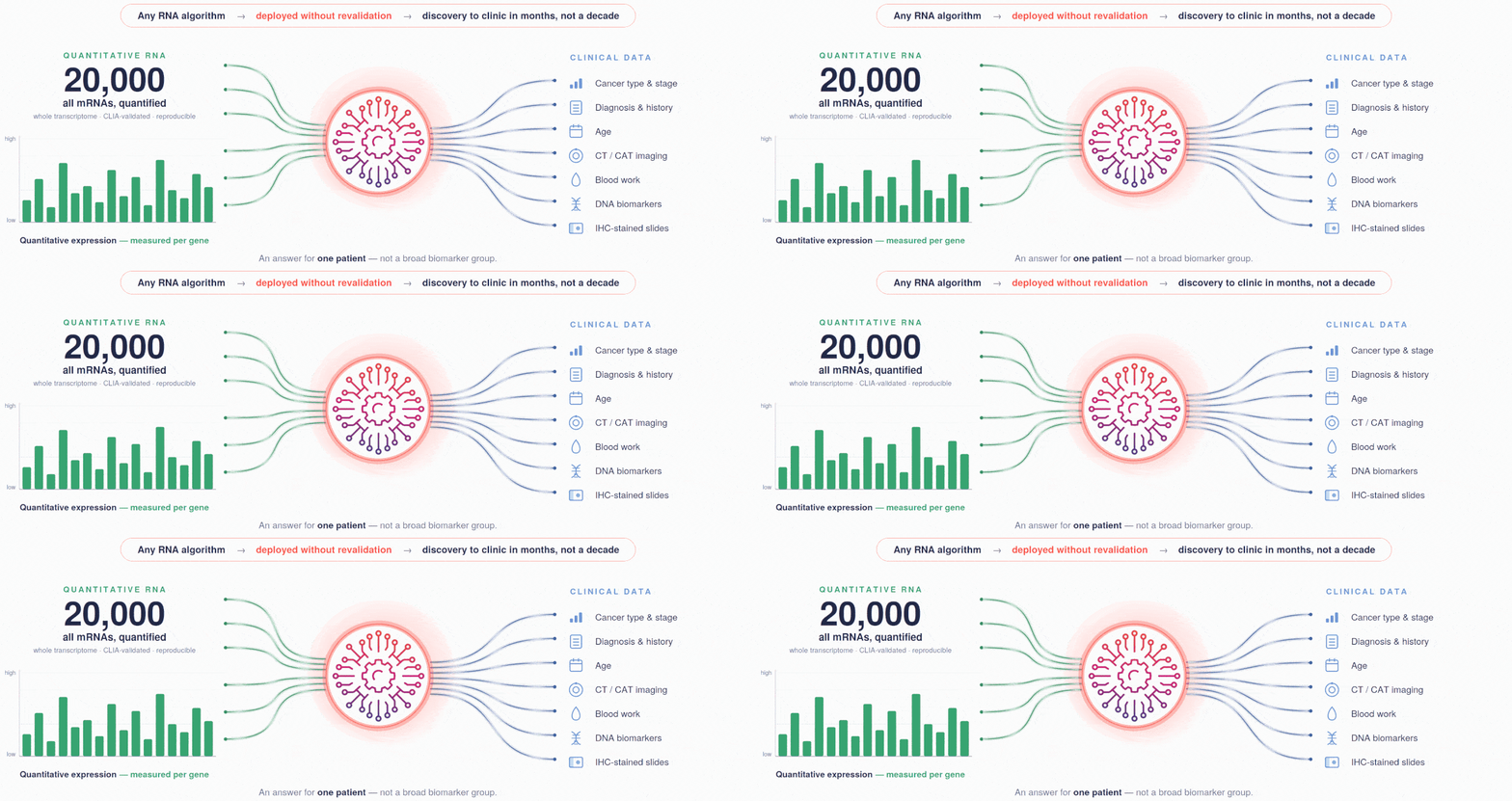
Implement an RNA AI-enabling platform to (1) improve oncology outcomes today under an existing payer code, (2) develop RNA AI for truly precision medicine, and (3) discover new targets.
RNA-based diagnostic algorithms are already clinically validated and changing standard of care. Tests like Oncotype DX (16 RNA biomarkers by PCR), Decipher Prostate, and Afirma have validated that reading RNA from tumor tissue can guide treatment decisions — but each addresses only one clinical question with a small panel.
More than 350,000 RNA algorithms, as reported in the literature, remain unused and have never reached the clinic.
The traditional workflow requires re-engineering any discovered algorithm to a lower-resolution platform — years of work, millions of dollars — and then re-validating from scratch. That is the step that kills 350,000 algorithms.
Because OneRNA® is itself a quantitative, whole-transcriptome RNA-seq platform — the same modality where algorithms were originally discovered — any published RNA algorithm can be uploaded and deployed directly, without years of re-validation.
OneRNA® is different from these first-generation RNA algorithms because it connects directly to treatment options beyond yes/no binary decisions to one treatment
IMPROVE CARE NOW
- Match practically all patients — close to 100% diagnostic yield, vs 25–40% for DNA panels
- Surface matching clinical trials and increase enrollment
- Runs in your own CLIA lab on proprietary OneRNA® reagents and APIs
- HIPAA- and CLIA-compliant data exchange with your EMR
YOUR DATA IS THE UPSIDE
- New revenue under an RNA-seq-specific payer code
- Combine your clinical data with OneRNA® data to surface new therapeutic targets
- Identify non-responders earlier
- A path to next-generation cures — including bespoke RNA therapeutics
How do we compare
DNA sequencing has demonstrated its clinical value, but missing a very important layer of information. Both types of testing are necessary to uncover all options for a patient and can be billed under separate payor codes
DNA Panels
500-geneTypical 500 genes -> binary test
OneRNA
20,000 RNA's -> quantitatively
40% of patients matched to one drug
Drops to 26% in low mutation tumors
Almost 100% of patients matched to a drug
Matching to typically more than one option
Does not detect
- Over-Expression
- Fusions
- Immune therapy targets
- Tumor Microenvironment
Detects
- Over-expression
- Fusions
- Immune therapy targets
- Tumor Microenvironment
Interested in learning more
Subscribe
100 Cummings Center, Suite 451C, Beverly, MA 11954